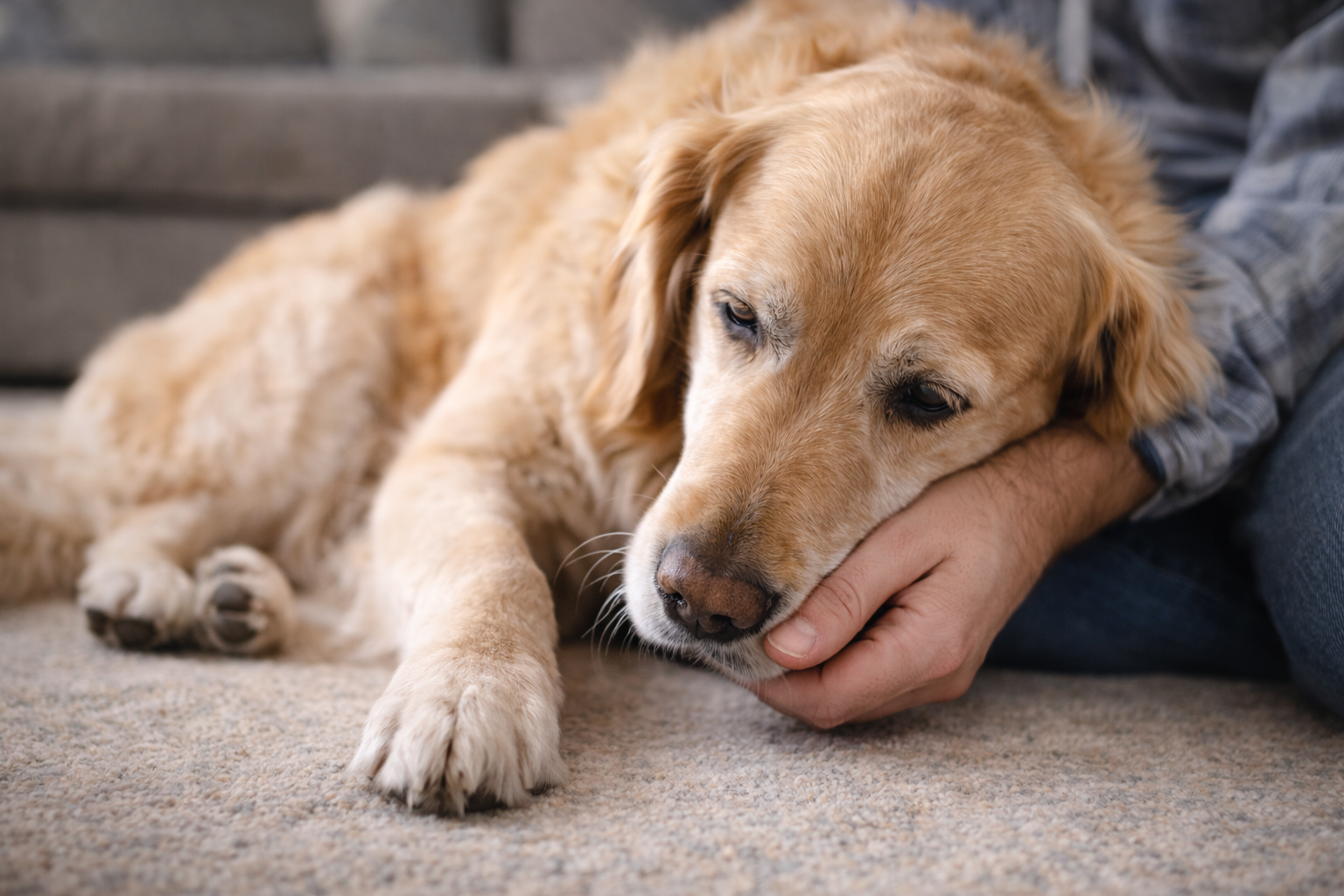
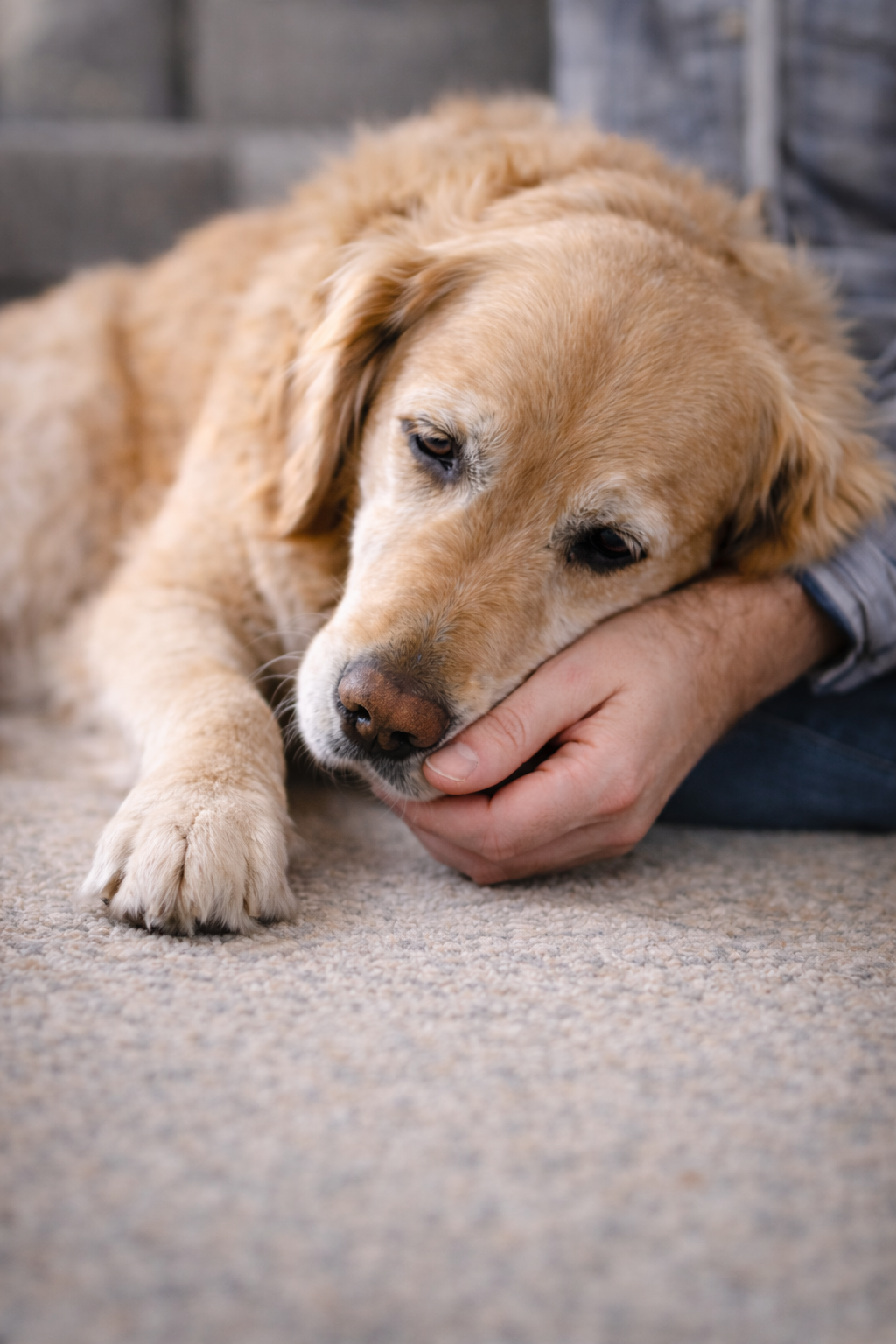
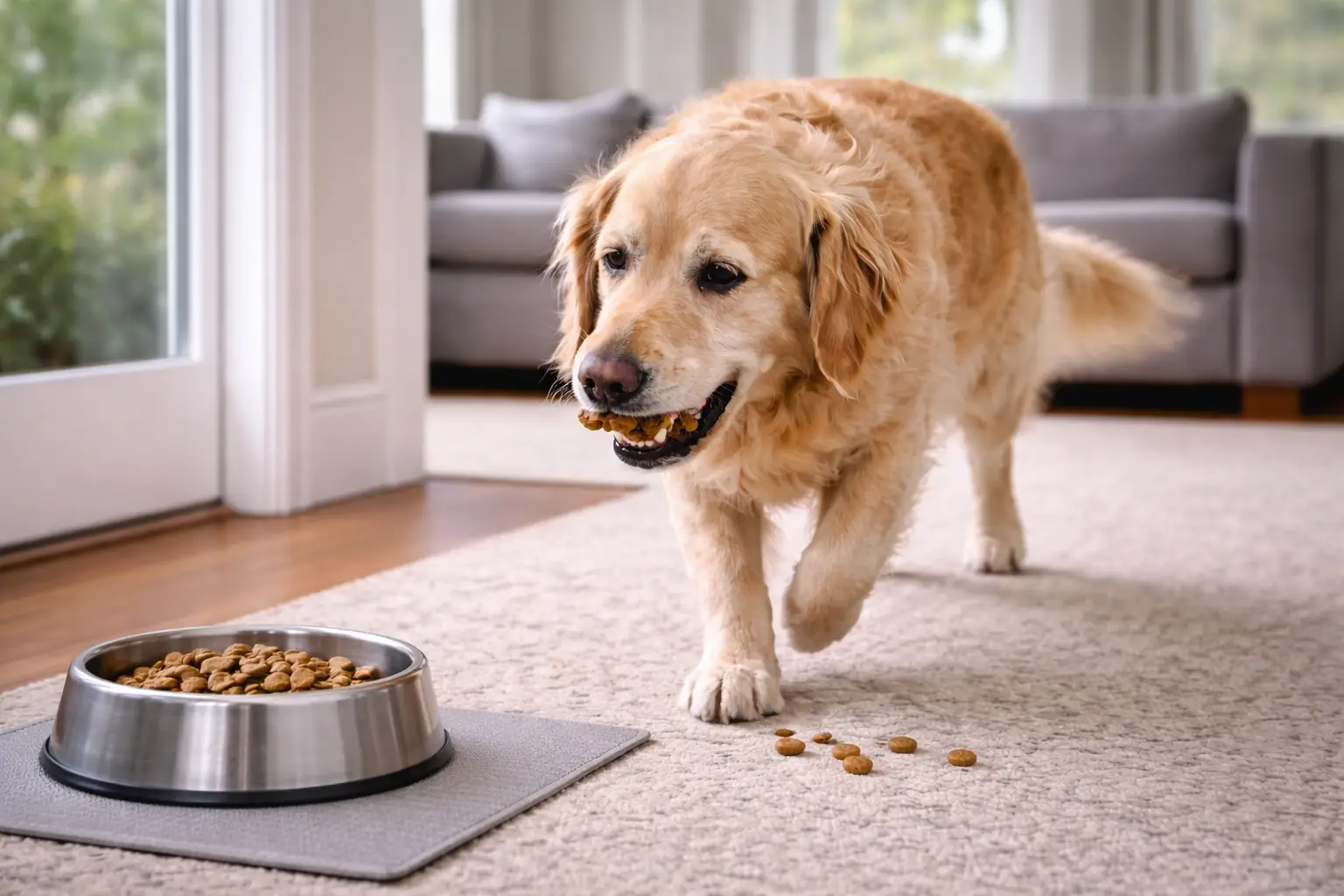
Daily habits can shift as well. A painful dog may eat less, sleep more, wake often, or struggle to find a comfortable position. Bathroom habits can change and some dogs may have accidents indoors even though they are normally house trained. You may also notice licking or chewing at one specific spot on the body, which can be a clue that something hurts.
A key point is that pain often gets mistaken for normal aging. Reluctance to jump, slower walks, or difficulty rising can look like getting older, but it can also be a sign of discomfort that deserves attention. Pain can also look different depending on where it is. For example, a dog with an ear issue might react strongly when the ear is touched, while a dog with joint pain might avoid stairs and move stiffly. If your instincts say your dog is not acting like themselves, trust that feeling and investigate.
If you suspect pain, the safest next step is a veterinarian visit. A vet will start with a full physical exam and may recommend tests like x rays or bloodwork to find or rule out causes. Once the problem is clearer, your vet can suggest a plan that may include medication, rehabilitation or physical therapy, and sometimes complementary options such as acupuncture.
Do not give human pain medicine. This is extremely important. Many human medications are dangerous for dogs, and some can be fatal even in small amounts. Also keep all medications out of reach because some dogs will chew through bottles. If pain relief is needed, your veterinarian is the right person to choose what is safe and what dose is appropriate.
For long term pain such as osteoarthritis, veterinarians often use prescription options like NSAIDs to reduce pain and inflammation, but these drugs can have side effects and your vet should explain both the benefits and risks. The main message is to treat pain as a medical issue, not as a training problem.
Leaving pain untreated has a cost. Ongoing discomfort can lead to irritability, low mood, reduced appetite, weight loss, sleep issues, and a lower quality of life. Early action usually means better comfort and better outcomes. If your dog’s movement, behavior, appetite, or daily habits change in a way that is unusual for them, it is worth checking sooner rather than later.

 Why Dogs Move Food Around?
 Can Dogs Have Panic Episodes?
