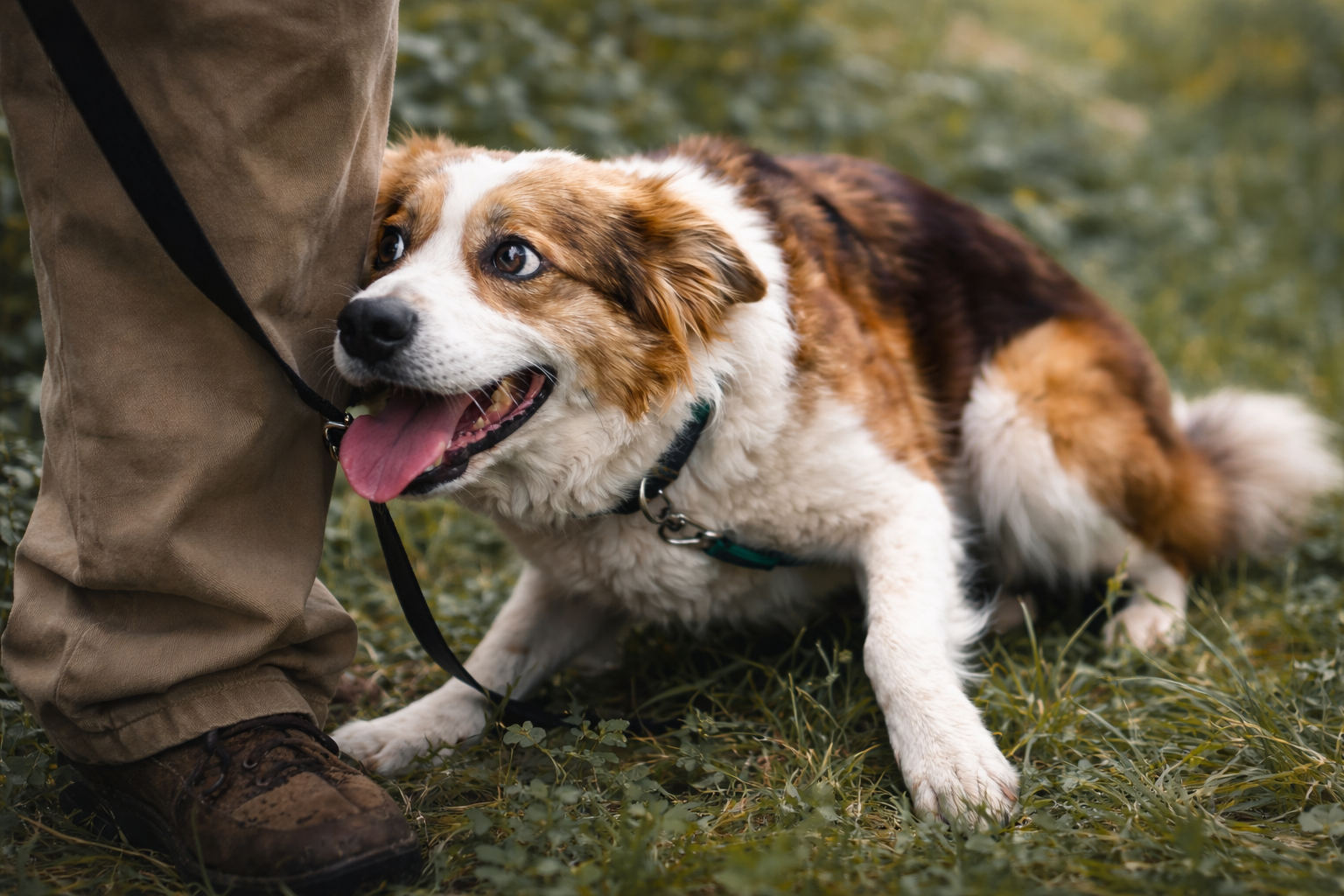
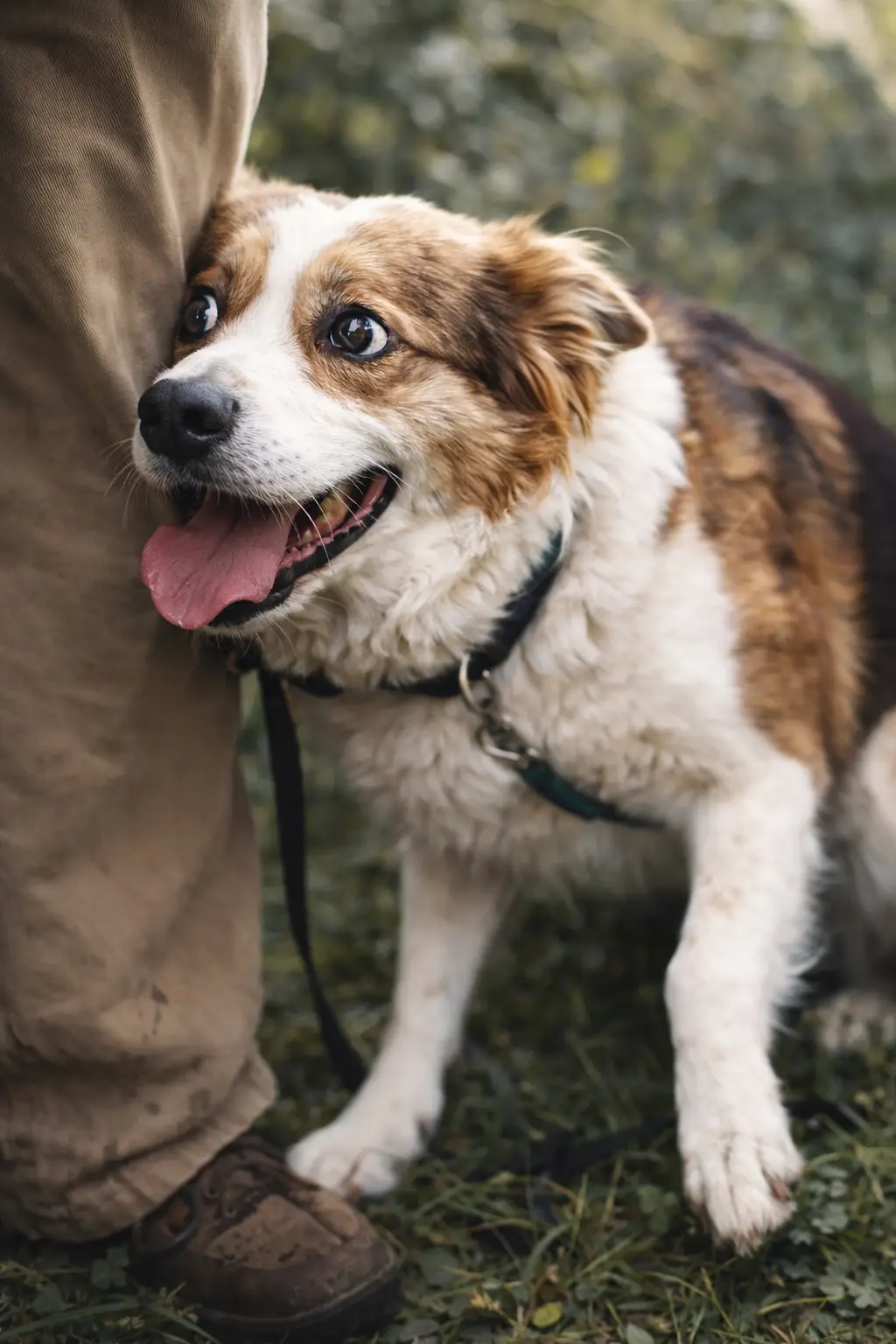
Sometimes it is a scary environment like elevators, slippery floors, crowded lobbies, a new building, or a tight hallway. Sometimes it is social pressure such as strangers leaning over the dog, fast approaching dogs, direct staring, or rough handling. And sometimes you cannot find the trigger at all. Dogs can react to sounds you do not notice, smells you cannot detect, or memories linked to a place.
The most important rule in the moment…
Do not punish.
No yelling, no leash jerks, no corrections, no forcing the dog to face the scary thing. Punishment adds more fear to an already fearful brain. It can also teach the dog that you are unsafe during scary moments. If you want fewer episodes, your dog needs you to be the calm exit door.
What to do during an episode?
Step one stay calm and slow
Your dog reads your body. If you get tense and rushed, many dogs escalate. Use a low voice. Move gently.
Step two create distance and safety
If you can move away from the trigger, do it. Go behind a car, into a quiet hallway, back inside, or to a calmer area. Distance is often the fastest relief. If you are at home, guide your dog to a quiet room they already like.
Step three reduce stimulation
Lower lights if possible. Close curtains if outside visuals make it worse. Turn on a fan or white noise if sound is the problem. Keep the environment simple.
Step four offer simple coping options
Some dogs calm faster when they can sniff. If your dog can take food, scatter a few treats on the ground and let them search. Sniffing is grounding for many dogs. If your dog refuses food, that is fine. Do not insist. Just keep focusing on safety and distance.
Step five do not demand performance
This is not the time to drill commands. If your dog already knows an easy cue that feels like a game, such as touch, you can use it lightly once they are starting to recover. If they cannot respond, stop asking and keep the situation easier.
Step six let recovery be real
After the episode, keep the rest of the day calmer. Give water. Skip stressful errands. Let your dog decompress. Recovery time is part of treatment, not weakness.
What not to do
Do not force your dog toward the trigger to prove they are fine
Do not trap the dog in a tight space if they are trying to flee
Do not flood them with touch if they are avoiding your hands
Do not assume they will grow out of it without a plan
When you should involve a professional
If episodes repeat, intensify, or lead to dangerous behavior like self injury, crashing into doors, or trying to escape, get help. Also involve a vet if this starts suddenly in an adult or senior dog, or if you suspect pain. Pain and medical issues can increase fear. A qualified behavior professional can help you identify triggers and build a safer plan. In some cases medication can be a helpful support while you do training, especially if the dog is living in a constant high stress state.
How to reduce future episodes
Think in three parts. Management, skills, and gradual exposure.
Management means fewer scary surprises
Pick quieter walk times
Avoid narrow paths where a sudden dog appears
Use sound management during fireworks seasons
Prepare a safe room for storms or noisy nights
Set clear rules for guests so your dog is not pressured
Skills means giving your dog a toolbox
Teach simple calming routines in peaceful moments. A settle on a mat, a hand target, a find it game, or a simple look cue. These are not about obedience. They are about giving the dog something predictable to do when stress rises.
Gradual exposure means slow and controlled learning
When your dog is stable, you can work under threshold. That means your dog can notice the trigger and still eat and respond gently. Start far away, pair the trigger with good things, and end sessions before your dog gets overwhelmed. Over time the dog learns that the trigger predicts safety, not danger.
Final message
Yes, dogs can have panic like episodes. The best response is calm handling, safety, and zero punishment. The best long term strategy is smart management, confidence building routines, and gradual training with professional support when needed. Your dog does not need you to be tough. Your dog needs you to be steady.

 Why Dogs Move Food Around?
 How To Spot Dog Pain Signs Quickly
