
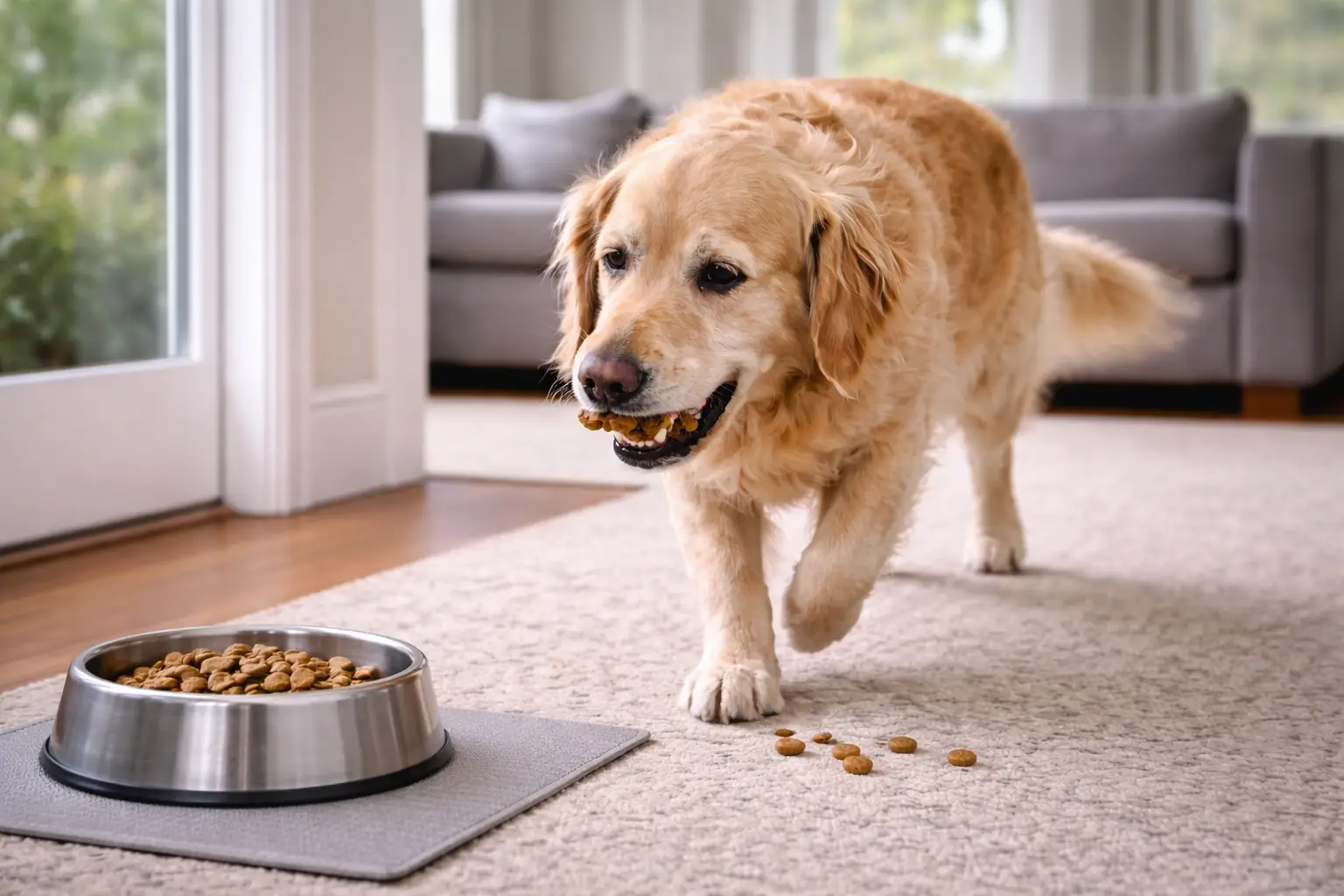
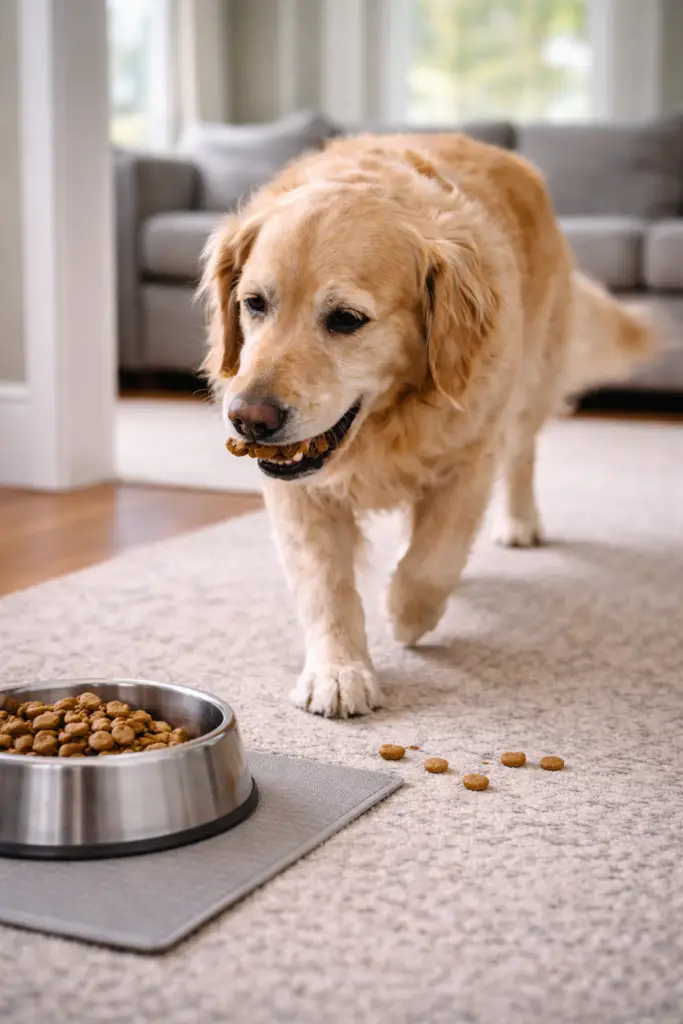
You put the bowl down in the usual spot, your dog takes a mouthful, walks away, and starts eating somewhere else. Sometimes it is a corner of the living room. Sometimes it is your bedroom. Sometimes you find kibble “landmines” on the floor. It looks strange, but in most cases it is a normal dog behavior and it is not about the color of the bowl or your dog trying to be annoying. Even experts can not point to one single reason that explains every dog. Instead, there are a few common patterns that make this behavior make sense.
1. Instinct from pack life
One of the strongest explanations is simple ancestry. In a wild group feeding situation, food is valuable and conflict is risky. Taking a piece and moving away reduces competition and lowers the chance of confrontation. Many dogs still carry that “grab and retreat” instinct, even when they live in a safe home and no one is actually threatening their meal.
You may notice this more in dogs that are naturally cautious, softer in social situations, or more likely to avoid conflict. The dog is not being dramatic. The dog is choosing the safest strategy their brain knows.
2. Feeling vulnerable or protecting the meal
Some dogs move food because they feel exposed while eating. That feeling can happen even if the dog is the only pet in the home. The dog may simply prefer a spot that feels more protected, such as near a wall, under a table, behind furniture, or close to you. This also fits the idea that younger or more passive animals in a group take their share and guard it elsewhere. Instinct can override logic.
If you have multiple dogs, this reason becomes even more likely. A dog may carry food away to avoid being crowded, stared at, or rushed. Even if there is no fighting, the dog may still feel pressure.
3. They want company while they eat
Dogs are social animals. Some dogs do not enjoy eating alone in a quiet corner while their people are in another room. They may bring food closer to you because your presence feels safe, or because eating has become a social moment with attention, encouragement, or even occasional hand feeding. Over time, the dog learns that food plus your presence feels better than food alone.
You might see this with dogs who follow you from room to room, or dogs who hesitate to start eating until you are nearby.
4. The bowl itself is uncomfortable
Sometimes the dog is not avoiding the food. They are avoiding something about the feeding setup. A metal bowl can make a loud clinking sound when kibble hits the sides. Collar tags can jingle against the bowl. Some dogs find those sounds irritating or startling, so they pick up food and move away from the noise.
If your dog only moves food when eating from one specific bowl, try a quieter option and remove dangling tags during meals. Also check the feeding surface. A bowl that slides can be annoying and can push a dog to abandon the spot.
5. Normal guarding behavior and “saving for later” instincts
Food related guarding is a normal canine behavior. In nature, protecting a meal keeps it from being stolen. In homes, that instinct can still show up as stiff body language, hovering, rushing to finish, carrying food away, or even trying to hide food. There is also a related behavior called caching, where an animal stores food for later, often by hiding or burying it. Some dogs do a home version of this by dropping food in another room or “covering” the bowl with items nearby.
It is important to separate mild, normal guarding from risky behavior. Threat displays like growling or snapping can happen and should be handled carefully and calmly. If you are not confident, get help from a qualified behavior professional rather than testing the dog.
6. Covering or hiding the food can mean the dog is uncomfortable
Some dogs do not just move food. They try to hide it. They might push a blanket, a sock, or another object toward the bowl. This often suggests the dog does not feel fully comfortable eating right now, in this location, with what is happening around them. Busy activity, a new person, another animal nearby, or a change in the feeding place can be enough to make a sensitive dog pause and try to “save” the meal for later.
When is it actually a problem
In many cases, it is only messy, not dangerous. If your dog is relaxed, eats normally, and the behavior is consistent, it is usually nothing to worry about.
You should pay closer attention if any of these are true
The behavior starts suddenly after months or years of eating normally
Your dog seems anxious at the bowl, startles easily, or refuses meals
There is growling, snapping, guarding, or tension between dogs
You notice drooling, mouth discomfort, chewing changes, or appetite loss
A sudden change can sometimes point to discomfort, dental pain, or another medical issue, so a vet check is a smart first step if the behavior is new or escalating.
Practical fixes that usually help
Choose a calmer feeding location away from heavy traffic in the home
Feed dogs separately if you have more than one dog
Try a quiet bowl and remove noisy tags during meals
Use a non slip mat under the bowl
Avoid hovering or reaching toward the dog while eating
If guarding shows up, do not punish. Get professional guidance
Bottom line
Most dogs who carry food to another spot are following instinct, seeking safety, preferring company, or avoiding something uncomfortable about the bowl area. It can be annoying, but it is usually normal. If it becomes sudden, intense, or paired with stress or guarding, treat it as a signal to improve the setup and, when needed, get veterinary or behavior support.
Related Posts
 How To Spot Dog Pain Signs Quickly
 Can Dogs Have Panic Episodes?
