Bringing a second dog home can be exciting for the family, but your resident dog may not immediately share that enthusiasm.
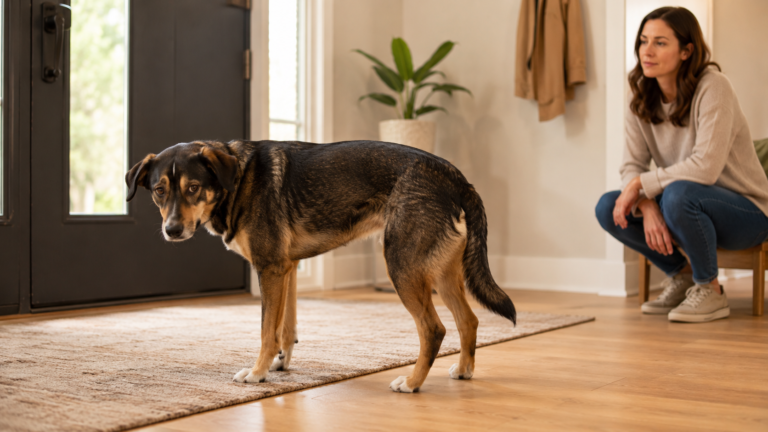
A dog who has been accustomed to having your attention, resting spaces, toys, and daily routine to themselves may suddenly face another dog competing for access to the same things. You might notice your dog pushing between you and the newcomer, demanding attention, guarding toys, becoming restless, or even growling when the other dog approaches.
These behaviors are often described as jealousy. Research suggests that dogs can show behaviors consistent with a basic form of jealousy when their owner directs attention toward a potential social rival, although scientists are still studying exactly how canine jealousy compares with the human emotion.
Whatever label we use, the practical issue is the same: your resident dog may feel uncomfortable about sharing access to people, spaces, or valuable resources.
A careful introduction can make a significant difference.
Can Dogs Really Get Jealous of Another Dog?
Dogs can react strongly when another dog receives attention from someone they value.
Possible behaviors include:
- Pushing between you and the other dog
- Pawing or nudging you for attention
- Blocking the other dog from approaching
- Barking or whining
- Becoming unusually clingy
- Staring at the other dog
- Growling or snapping
- Guarding beds, toys, food, or resting areas
- Following you more closely than usual
In one controlled study, dogs were more likely to push against their owners, move between their owner and a dog-like object, and show other attention-seeking behaviors when the owner interacted affectionately with what appeared to be another dog rather than with nonsocial objects. Later research, however, found less conclusive results, so canine jealousy should still be considered an evolving area of behavioral science.
From a practical behavior perspective, it is often more useful to focus on what the dog is doing and what triggers the behavior rather than trying to determine exactly which human-style emotion they are experiencing.
Jealousy and Resource Guarding Are Not the Same Thing
These behaviors can overlap, but they are not identical.
A dog who pushes between you and another dog while you are petting them may be competing for social attention.
A dog who freezes, growls, snaps, or attacks when another dog approaches their food bowl, toy, bed, or resting place may be displaying resource guarding.
Dogs can guard many things they consider valuable, including food, toys, chews, sleeping areas, territory, and sometimes access to particular people. Resource guarding can range from subtle avoidance to serious aggression.
This distinction matters because significant resource guarding requires much more careful management than mild attention-seeking behavior.
Before Getting a Second Dog, Consider Compatibility
Successful introductions begin before the new dog comes home.
A second dog should not be chosen only because you personally like the breed, appearance, age, or personality.
Consider your resident dog’s:
- Age
- Energy level
- Play style
- Size
- Health
- Social history
- Confidence around other dogs
- Resource guarding tendencies
- Ability to relax around dogs
- Preference for social interaction
A calm senior dog, for example, may find an energetic puppy exhausting rather than entertaining.
Likewise, a dog who tolerates other dogs during walks does not necessarily want to live with another dog every day.
Veterinary behavior guidance recommends considering temperament, activity level, health, and previous interactions with other dogs before adding another dog to the household.
Start With Meetings Before Moving In Together
Whenever possible, do not make the first introduction the moment the new dog walks through your front door.
Arrange one or more meetings beforehand.
A neutral outdoor location is often easier because neither dog feels that the other has suddenly entered their established home territory.
Keep the first meeting calm and relatively short.
The goal is not to make the dogs play immediately.
The goal is simply for them to notice each other and remain comfortable.
Begin With a Parallel Walk
Walking together can be one of the easiest ways to begin an introduction.
Ideally, have one person handling each dog.
Start with enough distance between the dogs that both can:
- Walk normally
- Take treats
- Respond to their handler
- Sniff the environment
- Look away from the other dog
- Maintain relaxed body language
They do not need to walk directly beside each other.
Gradually reduce the distance if both dogs remain comfortable.
Walking in the same direction creates a shared activity without forcing intense face-to-face interaction.
Do Not Force Dogs to Greet
Owners often believe the dogs need to sniff each other immediately. They do not. A direct approach can create unnecessary social pressure, particularly when both dogs are restrained on leashes. Allow interaction to develop gradually. If one dog repeatedly turns away, hides behind you, freezes, avoids eye contact, or tries to increase distance, respect those signals. Forcing a nervous dog closer can turn discomfort into defensive behavior.
Watch the Entire Body, Not Just the Tail
Before allowing closer interaction, look at both dogs carefully.
More relaxed signals may include:
- Loose body movement
- Soft facial expression
- Curved approaches
- Normal blinking
- Sniffing the environment
- Ability to disengage from the other dog
- Relaxed movement of the body and tail
Possible signs of increasing tension include:
- Freezing
- Hard staring
- Closed, tense mouth
- Stiff posture
- Blocking movement
- Standing over the other dog
- Persistent following
- Lip lifting
- Growling
- Repeated mounting
- Trying to escape
- Sudden stillness around resources
Growling should not be punished. It is valuable communication telling you that the dog is uncomfortable. Instead of
punishing the warning, increase distance and identify what caused the tension.
Bringing the New Dog Home
Once several meetings have gone well, you can begin introducing the dogs to the home environment. If possible, allow them to spend some time together outside before entering. Keep the atmosphere calm. This is not the moment for excited greetings from the entire family, piles of toys on the floor, food bowls, or high-value chews. Reducing excitement reduces opportunities for conflict.
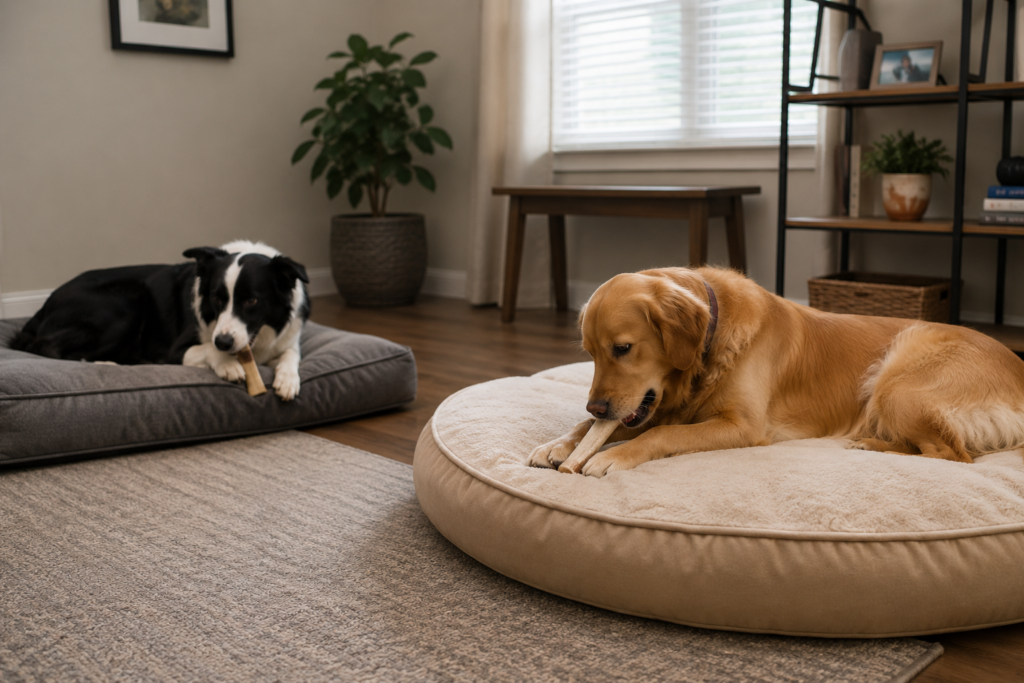
Give Each Dog Their Own Space
Two dogs living together should not be expected to share everything.
Each dog should have access to their own:
- Bed
- Feeding area
- Resting space
- Water access
- Crate or safe area if used
- Individual time with the owner
Baby gates, pens, separate rooms, and other barriers can be extremely useful during the adjustment period. Being able to separate the dogs safely is not a sign that the introduction has failed. It is good management. Dogs need opportunities to rest without constantly monitoring or interacting with each other.
Feed Dogs Separately
Meals are one of the easiest situations in which competition can develop.
Feed the dogs in separate areas, especially during the early stages of living together.
Do not place bowls next to each other in an attempt to teach them to share.
Dogs do not need to prove that they can tolerate another dog standing beside them while they eat.
Separate feeding allows both dogs to eat without social pressure and is also a common management strategy for resource guarding.
Pick up bowls when meals are finished.
Be Careful With Toys and Chews
Do not immediately cover the floor with exciting toys. Even a dog who has never guarded toys from humans may behave differently when another dog is involved.
High-value items can include:
- Bones
- Long-lasting chews
- Stuffed food toys
- Balls
- Tug toys
- Favorite stuffed animals
- Stolen household items
Initially, provide valuable chews or food toys while the dogs are separated. Once their relationship becomes more predictable, lower-value toys can gradually be introduced under supervision. If you see freezing, hovering, staring, rushing toward an object, blocking access, or guarding behavior, intervene by calmly separating the dogs rather than trying to make them work it out themselves.
Your Attention Can Also Become Valuable
Food and toys are not the only resources.
Access to you may also create competition.
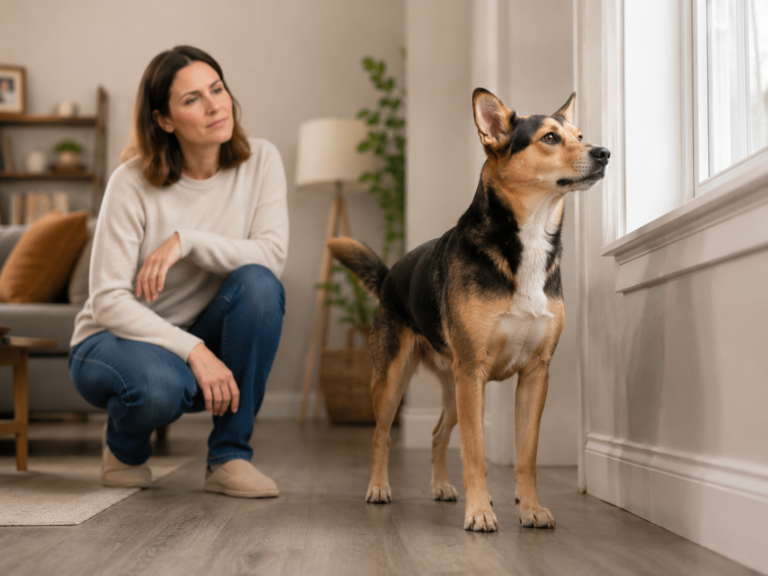
Imagine that you are sitting on the sofa petting the new dog. Your resident dog walks over, pushes the newcomer away, climbs between you, and demands attention.
If this behavior repeatedly succeeds, your dog may learn:
Push the other dog away → I get the person to myself.
Instead, create predictable boundaries.
You can give both dogs affection without allowing one dog to physically displace the other.
Reward calm approaches, waiting, settling nearby, and respecting space.
The goal is not to prove that both dogs receive precisely identical attention every second.
The goal is to make access to you feel predictable and safe.
Give Your Resident Dog Individual Time
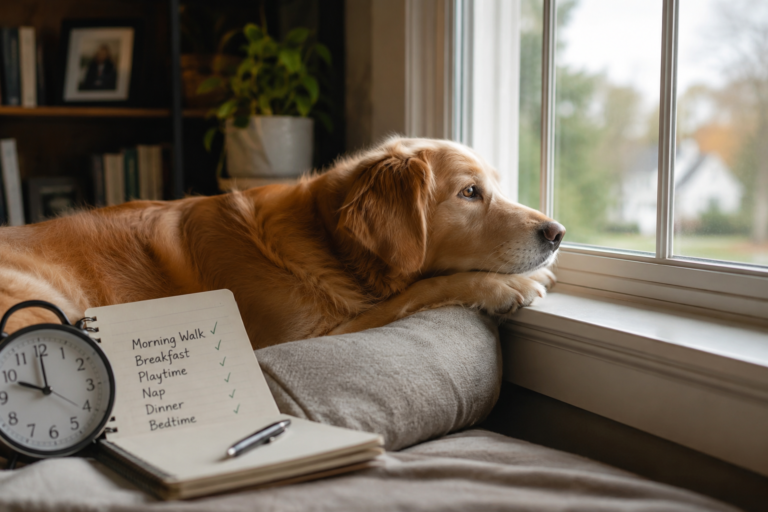
A new dog can completely change the household routine.
Suddenly, the newcomer receives attention for:
- House training
- Walks
- Feeding
- Veterinary visits
- Basic skills
- Exploring the home
- Managing new situations
It is easy for the resident dog’s normal routine to disappear.
Try to maintain important parts of their previous lifestyle.
Continue individual:
- Walks
- Play
- Rest time
- Training
- Affection
- Enrichment
This does not mean excluding the new dog. It simply prevents the resident dog’s entire world from changing overnight.
Give the New Dog Individual Time Too
The same principle applies to the newcomer. Constantly keeping both dogs together can create dependency, competition, and exhaustion.
Each dog should be comfortable:
- Resting separately
- Walking separately
- Working with you separately
- Receiving attention separately
- Spending short periods away from the other dog
A healthy multi-dog household does not require the dogs to do everything together.
Reward Calm Behavior Around Each Other
One of the most useful goals is simple:
Teach each dog that good things happen when the other dog is nearby.
For example, when your resident dog calmly watches you interact with the newcomer, reinforce that calm response.
When both dogs settle near each other, reward them.
When one dog approaches and the other remains relaxed, acknowledge it.
When a dog chooses to move away instead of escalating tension, allow that choice.
You are building positive associations without forcing intimacy.
Do Not Encourage Competition
Some common activities can unintentionally increase tension during the early adjustment period.
Be cautious about:
- Throwing one ball for both dogs
- Letting both rush through doorways
- Dropping treats between them
- Feeding treats from one hand while they crowd each other
- Encouraging rough play in small spaces
- Allowing both dogs to climb onto you simultaneously
- Leaving valuable chews available
- Creating excitement around arrivals
Structure these situations instead. Teach the dogs to wait, take turns, respond individually, and maintain personal space. Dogs are capable of responding to unequal reward situations, but household harmony depends more on predictable access and clear management than on trying to make every interaction mathematically equal.
Do Not Let Them “Work It Out”
This is one of the most dangerous pieces of advice in multi-dog households.
Repeated conflict does not necessarily teach dogs to become friends.
It can teach them that the other dog is unpredictable or dangerous.
Every serious confrontation can strengthen negative associations and make future interactions more difficult.
Intervene before tension becomes a fight.
Management is especially important around:
- Food
- Toys
- Resting areas
- Doorways
- Narrow hallways
- Owner attention
- Visitors
- Exciting arrivals
- Outdoor gates
- High-arousal play
If tension is rising, calmly create distance.
Should You Use Leashes Indoors?
A lightweight leash can sometimes make early supervised interactions easier to manage because it allows an adult to guide a dog away without grabbing their collar.
However, a leash should only be used under direct supervision.
Never leave dogs unattended while wearing drag lines or leashes because they can become caught on furniture, doors, or each other.
Barriers such as baby gates are usually safer when active supervision is not possible.
Do Not Punish Jealous or Guarding Behavior
Shouting, leash corrections, intimidation, or physical punishment may suppress a dog’s warning signals without changing the emotional reason behind them. This can make interactions less predictable. Resource guarding in particular can worsen when dogs believe that the presence of another individual means valuable things will be taken away. Behavior modification generally focuses instead on management, desensitization, and changing the dog’s emotional association with the approach of others. The objective should be to help the dog feel safer, not simply make them stop communicating discomfort.
How Long Does It Take for Two Dogs to Adjust?
There is no universal timeline.
Some dogs become comfortable within days.
Others need weeks or months.
And some dogs may eventually coexist peacefully without ever becoming close playmates.
All of these outcomes can be successful.
Do not measure progress only by whether the dogs play together.
More meaningful signs include:
- Relaxing in the same room
- Sleeping comfortably
- Walking past each other without tension
- Responding to you around each other
- Disengaging when necessary
- Sharing household space without constant monitoring
- Recovering quickly after exciting situations
Peaceful coexistence is more important than friendship.
Warning Signs That the Introduction Is Moving Too Fast
Slow the process down if you notice:
- Repeated freezing
- Persistent hard staring
- Frequent blocking
- Guarding access to you
- Growling that becomes more frequent
- Snapping
- One dog constantly hiding
- One dog refusing to enter certain rooms
- Changes in appetite
- Difficulty sleeping or settling
- Persistent avoidance
- Repeated fights
- One dog continually bullying or overwhelming the other
A dog who tolerates the situation while remaining chronically stressed is not successfully adjusting.
When Should You Get Professional Help?
Professional support is particularly important when:
- Either dog has previously bitten another dog
- Serious fights have already occurred
- One dog guards you from the other
- Resource guarding is escalating
- One dog repeatedly pins, corners, or pursues the other
- One dog appears afraid inside their own home
- You cannot safely interrupt interactions
- Aggression occurs unpredictably
- The dogs cannot relax around each other
Significant aggression and resource guarding require individualized assessment rather than general training advice. Professional behavior support is recommended for aggression between animals and other complex household behavior problems. In severe cases, begin with complete management and separation until the situation has been professionally assessed.
Final Thoughts
Introducing a new dog to a resident dog who struggles with sharing attention should be a gradual process, not a single meeting.
Your job is not to force friendship.
It is to create an environment where neither dog feels they must compete for food, toys, space, rest, or access to you.
Start slowly, provide separate resources, supervise carefully, reward calm behavior, and give both dogs opportunities to spend time apart.
When dogs learn that the presence of the other does not threaten their safety or access to important resources, living together becomes much easier.
And if the behavior moves beyond mild attention seeking into serious guarding or aggression, involve a qualified professional before allowing the dogs to repeatedly practice conflict.