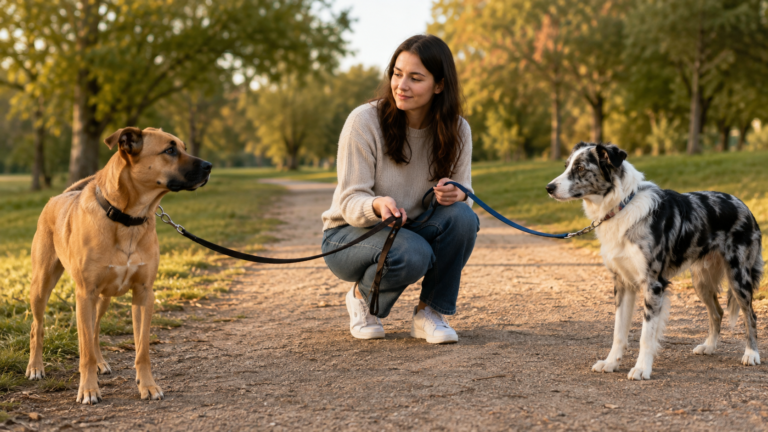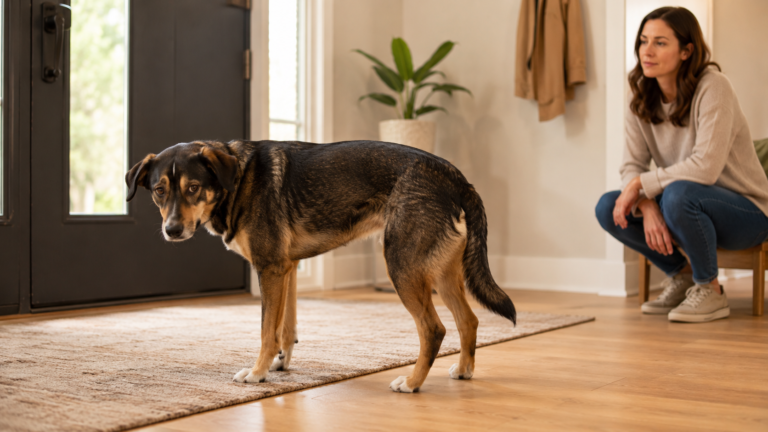
Hearing your dog growl can feel worrying, especially when the growl is directed at you or someone in your home. However, growling does not automatically mean that your dog is aggressive or trying to challenge you. A growl is often a warning. It is your dog’s way of saying that something feels uncomfortable, frightening, painful, or too intense. Instead of trying to silence the sound, it is important to understand what caused it. Punishing a dog for growling may stop the noise, but it does not solve the emotion behind it. In some cases, the dog may learn to stop giving warnings and react more suddenly in the future.
1. Stop Adding Pressure
When your dog growls, pause whatever you are doing. Do not continue touching, pulling, restraining, staring at, or approaching the dog. Avoid shouting, correcting, or trying to prove that you are in control. These reactions may increase the dog’s stress and make the situation more dangerous. If the dog appears close to snapping or biting, calmly create distance and make sure everyone is safe.
Do not make sudden movements or attempt to grab the collar. When there is no immediate danger, remain calm and allow the dog’s body to relax before moving away. The goal is not to reward threatening behavior. The goal is to prevent the situation from escalating while you identify the real cause.
2. Identify What Triggered the Growl
Think about exactly what happened before the growling started. Was the dog resting when someone touched them? Were you trying to take away food, a toy, or another valuable object? Did the growling happen during grooming, nail trimming, handling, or when the dog was being moved?
Common triggers can include:
• Being touched in a sensitive or painful area
• Protecting food, toys, resting places, or people
• Feeling trapped or physically restrained
• Being approached by an unfamiliar person
• Direct staring or intimidating body language
• Fear of grooming or medical handling
• Stress caused by children, visitors, noise, or other animals
The growl itself is only the visible part of the problem. Understanding the trigger gives you the information needed to change the situation safely.
3. Pay Attention to the Dog’s Stress Level
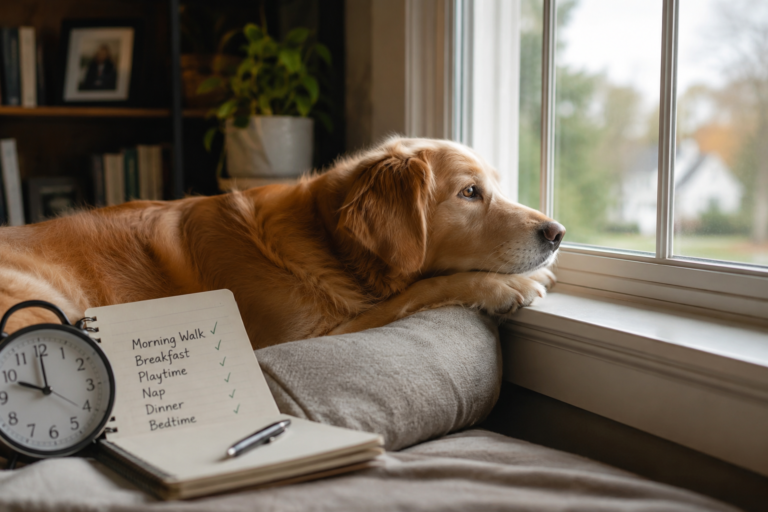
Dogs do not always react to one event alone. Stress can build throughout the day or over several days.
A dog may cope with visitors, loud noises, poor sleep, a stressful walk, nearby construction, or an uncomfortable interaction. Later, a small event that would normally be manageable may cause growling. This is why a dog may tolerate something one day but react differently another day. Look at the dog’s full routine. Consider whether they have had enough rest, whether the home has been unusually busy, or whether they have recently experienced frightening or frustrating situations. Reducing unnecessary stress can make it easier for the dog to remain calm and respond more appropriately.
4. Change the Way You Handle the Situation
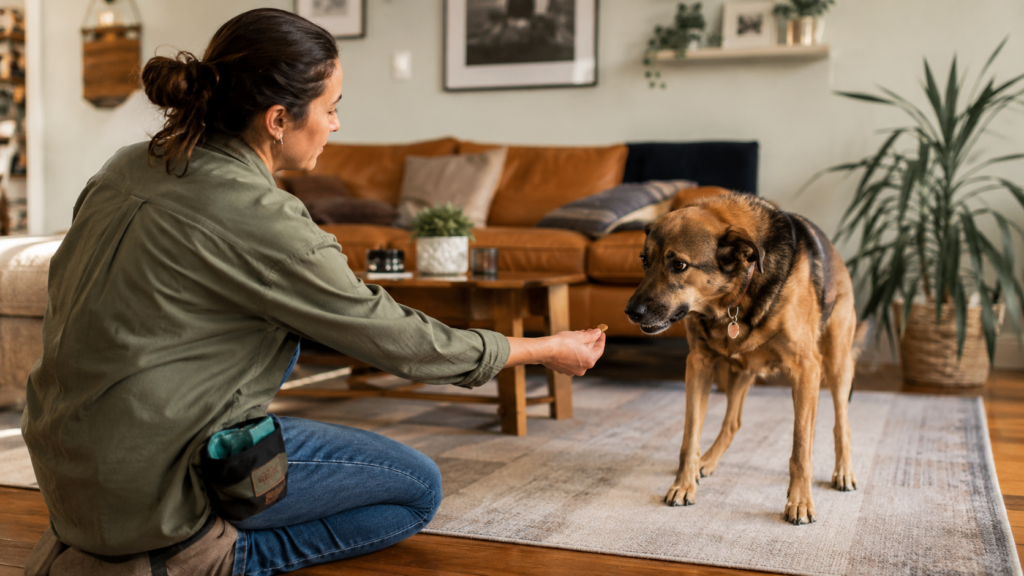
Avoid forcing the dog to complete an action that repeatedly causes growling. Instead of physically pushing or pulling the dog, guide them with a familiar cue, a treat, or another positive reward. If grooming causes discomfort, begin with very short sessions and reward calm behavior before the dog becomes tense. When the dog guards an object, do not reach directly toward their mouth. Teach them to exchange the object for something of equal or higher value. Management is also important. If visitors make the dog uncomfortable, prepare a quiet and secure area before guests arrive. If the dog is sensitive while resting, make sure family members understand that the dog should not be disturbed. These changes reduce conflict while new behavior is being taught.
5. Build a More Positive Association
Long-term improvement requires changing how the dog feels about the trigger, not simply stopping the growling.
This is usually done through gradual exposure and positive reinforcement. The dog is introduced to the trigger at an intensity they can handle while receiving something they value, such as food, distance, or access to a safe space. For example, if the dog becomes uncomfortable during brushing, begin by showing the brush from a distance and rewarding calm behavior. Later, the brush can move closer, followed by very brief contact. The process must remain below the dog’s reaction threshold. Moving too quickly can increase fear and make the behavior worse.
6. Consider Pain or a Medical Problem
A dog that suddenly starts growling, especially during touch or movement, may be experiencing pain or physical discomfort.
Dental problems, joint pain, injuries, skin irritation, ear infections, and other health conditions can change how a dog reacts to handling.
A veterinary examination is an important first step when the behavior appears suddenly, becomes more intense, or is unusual for that dog.
When Should You Contact a Professional?
Professional guidance is recommended when the dog has attempted to bite, has already bitten someone, guards multiple resources, reacts unpredictably, or lives with children or vulnerable family members. A qualified dog behavior professional can evaluate the dog’s body language, identify triggers, create a safety plan, and design a behavior modification program for the individual dog. The earlier the cause is addressed, the easier it is to prevent the behavior from becoming more serious.
Final Thoughts
Growling should never be ignored, but it should not automatically be punished either. It is valuable information about how the dog is feeling. By staying calm, creating safety, identifying the trigger, reducing stress, and using gradual behavior modification, you can address the cause instead of simply silencing the warning. Listening to the growl may be one of the most important steps in preventing a bite and building a safer relationship with your dog.